 admin
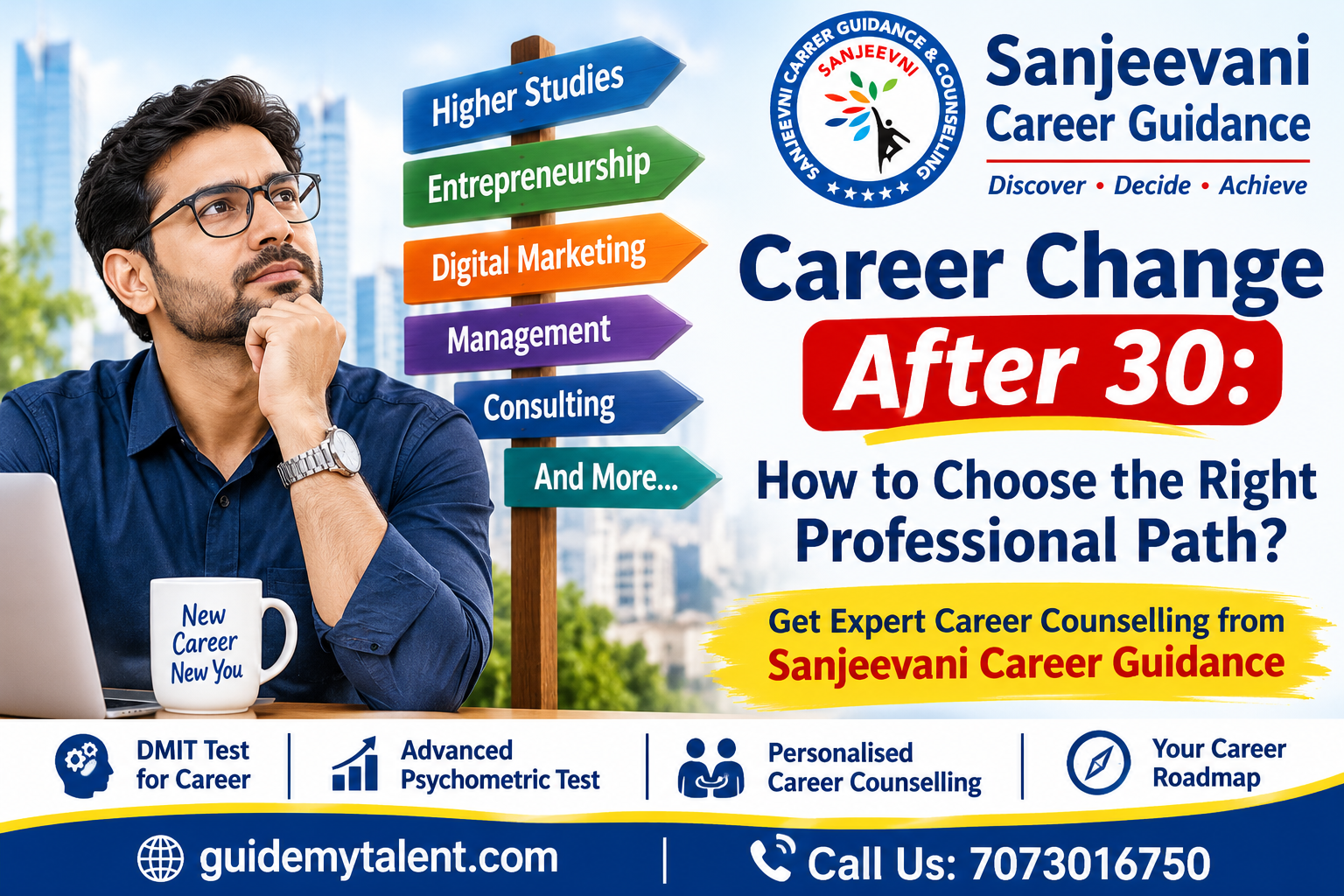
Career Change after 30 may feel challenging, especially when you already have years of work experience, financial responsibilities and professional commitments. However, turning 30 does not mean you have missed the opportunity to pursue a career that matches your interests, skills and natural abilities.
Many working professionals reach a stage where they feel dissatisfied with their current jobs, experience a lack of growth or realise that their present profession does not match their interests. If you are also thinking about changing your career, the right career guidance can help you understand your strengths, explore new opportunities and make a well-informed decision.
At Sanjeevani Career Guidance, we help individuals understand their personality, interests, aptitude and potential through scientific career assessment and personalised counselling.
Why Do People Consider a Career Change After 30?
There can be several reasons why professionals decide to explore a different career path after 30.
-
Lack of Job Satisfaction: You may no longer feel interested or motivated by your current profession.
-
Limited Career Growth: Your present job may not offer the growth opportunities you expected.
-
Changing Interests: Your interests, priorities and professional goals may change with time.
-
Work-Life Balance: You may want a profession that offers better personal and professional balance.
-
Financial Expectations: You may be looking for better earning opportunities and long-term stability.
-
Unrecognised Potential: You may realise that your natural strengths and abilities are better suited to another profession.
A career change is not necessarily about starting from zero. It can be an opportunity to use your existing experience in a new direction.
How to Choose the Right Career After 30?
Choosing a new profession requires proper planning, self-understanding and realistic expectations. Instead of following trends or making decisions in a hurry, consider these important steps.
1. Identify Your Interests and Professional Goals
Start by understanding what you genuinely enjoy doing. Think about the activities, responsibilities and work environments that make you feel motivated.
Ask yourself:
-
Which type of work interests me the most?
-
What professional goals do I want to achieve?
-
Do I enjoy working with people, technology, business or creative activities?
-
What kind of professional lifestyle do I want?
Understanding your interests can help you narrow down suitable career options.
2. Understand Your Strengths and Abilities
Your previous work experience may have helped you develop several valuable skills. However, you may also have natural abilities that you have never explored professionally.
Understanding your aptitude, personality traits, behavioural preferences and strengths can help you identify career paths that match your potential.
3. Explore Career Options Beyond Your Current Industry
Do not limit yourself to opportunities within your existing profession. Depending on your qualifications, interests and transferable skills, you may explore:
-
Business and Entrepreneurship
-
Digital Marketing and Branding
-
Human Resource Management
-
Teaching and Professional Training
-
Financial Planning and Consultancy
-
Technology and Data Analytics
-
Content Creation and Communication
-
Freelancing and Independent Consulting
Research the qualifications, experience and skills required before choosing a new field.
4. Evaluate Your Financial and Personal Responsibilities
A career transition after 30 requires financial planning. Consider your current income, savings, family responsibilities and the time needed to develop new skills.
You can also explore a gradual transition instead of leaving your current job immediately.
5. Upgrade Your Skills and Knowledge
Some career options may require additional training, certifications or practical experience.
Identify the skills needed for your chosen profession and create a realistic learning plan. Online courses, professional certifications, internships and practical projects can help you prepare for the transition.
6. Take Professional Career Counselling
Sometimes, it is difficult to identify the right career direction independently. Professional career counselling can help you understand your interests, personality, aptitude and professional strengths.
At Sanjeevani Career Guidance, career assessment and personalised counselling can help you:
-
Understand your natural strengths and abilities.
-
Identify your interests and personality traits.
-
Explore suitable career opportunities.
-
Evaluate different professional pathways.
-
Develop a practical career roadmap.
7. Make a Practical Career Transition Plan
Once you identify a suitable career direction, prepare a step-by-step transition plan.
-
Research your selected profession.
-
Understand industry requirements.
-
Identify skill gaps.
-
Build relevant qualifications and experience.
-
Set short-term and long-term career goals.
-
Transition at a pace that suits your circumstances.
Remember, a successful career change requires preparation, patience and consistent effort.
Best Career Options to Explore After 30

There is no fixed age limit for exploring new professional opportunities. Depending on your educational background, experience, interests and skills, you can consider several career paths.
Some options include:
-
Entrepreneurship: Start a business based on your skills, interests or industry experience.
-
Digital Marketing: Explore SEO, social media marketing, content marketing and online branding.
-
Teaching and Training: Share your professional knowledge through teaching, coaching or corporate training.
-
Human Resource Management: Explore recruitment, employee development and organisational management.
-
Financial Services: Consider financial planning, accounting or consultancy based on your qualifications.
-
Technology Careers: Explore data analytics, software development or other technology-related fields after appropriate training.
-
Freelancing: Use your existing professional skills to work independently with different clients.
The best career option is not necessarily the most popular one. It is the one that matches your abilities, interests, qualifications and long-term goals.
Why Career Assessment Is Important Before Changing Your Profession
One common mistake people make while changing careers is choosing a new profession only because it offers a higher salary or seems popular.
However, long-term career satisfaction also depends on your personality, aptitude, interests and working preferences.
A scientific career assessment can provide additional insights into these areas and help you evaluate different professional possibilities.
At Sanjeevani Career Guidance, we offer:
-
DMIT Test
-
Advanced Psychometric Test
-
Personality Assessment
-
Aptitude and Interest Assessment
-
Personalised Career Counselling
-
Professional Career Roadmap
Our two-test, two-report-based counselling approach helps individuals explore their strengths and understand potential career directions.
Why Choose Sanjeevani Career Guidance?

Sanjeevani Career Guidance focuses on helping students and working professionals make informed career decisions through individual assessment and professional guidance.
Whether you are planning a career change after 30, feeling confused about your professional future or exploring a completely different industry, understanding your abilities and interests is an important first step.
Our career guidance services are designed to help you explore your potential and make more informed professional choices.
Frequently Asked Questions (FAQs)
1. Is 30 too late to change your career?
No. There is no fixed age for changing careers. With proper planning, relevant skills and professional guidance, you can explore new career opportunities after 30.
2. How do I know which career is right for me after 30?
Start by evaluating your interests, aptitude, personality, qualifications and professional experience. Career assessment and counselling can help you explore suitable options.
3. Can I change my career without starting from zero?
Yes. Many professional skills, such as communication, management, problem-solving and leadership, can be transferred to different industries.
4. Is career counselling helpful for working professionals?
Yes. Career counselling can help working professionals understand their strengths, explore alternative career paths and plan their next professional move.
5. Can a psychometric test help me choose a new career?
An advanced psychometric assessment can help you understand your aptitude, interests and personality traits, providing useful insights while evaluating new career options.
6. Should I leave my current job before choosing a new career?
Not necessarily. It is generally better to research the new profession, evaluate your finances and develop the required skills before making a major career transition.
Conclusion: Your Career Journey Does Not End at 30!
Your age does not define your professional potential. If your current career no longer matches your interests, abilities or future goals, exploring a new direction can be a positive step.
The key is to understand yourself before making your next move. With proper planning, skill development and professional career guidance, you can make a more informed decision about your future.
Confused about your next career move? Connect with Sanjeevani Career Guidance and discover your professional strengths and possibilities.
Sanjeevani Career Guidance
DMIT Test | Advanced Psychometric Test | Professional Career Counselling
Call Us: 7073016750