 admin
admin
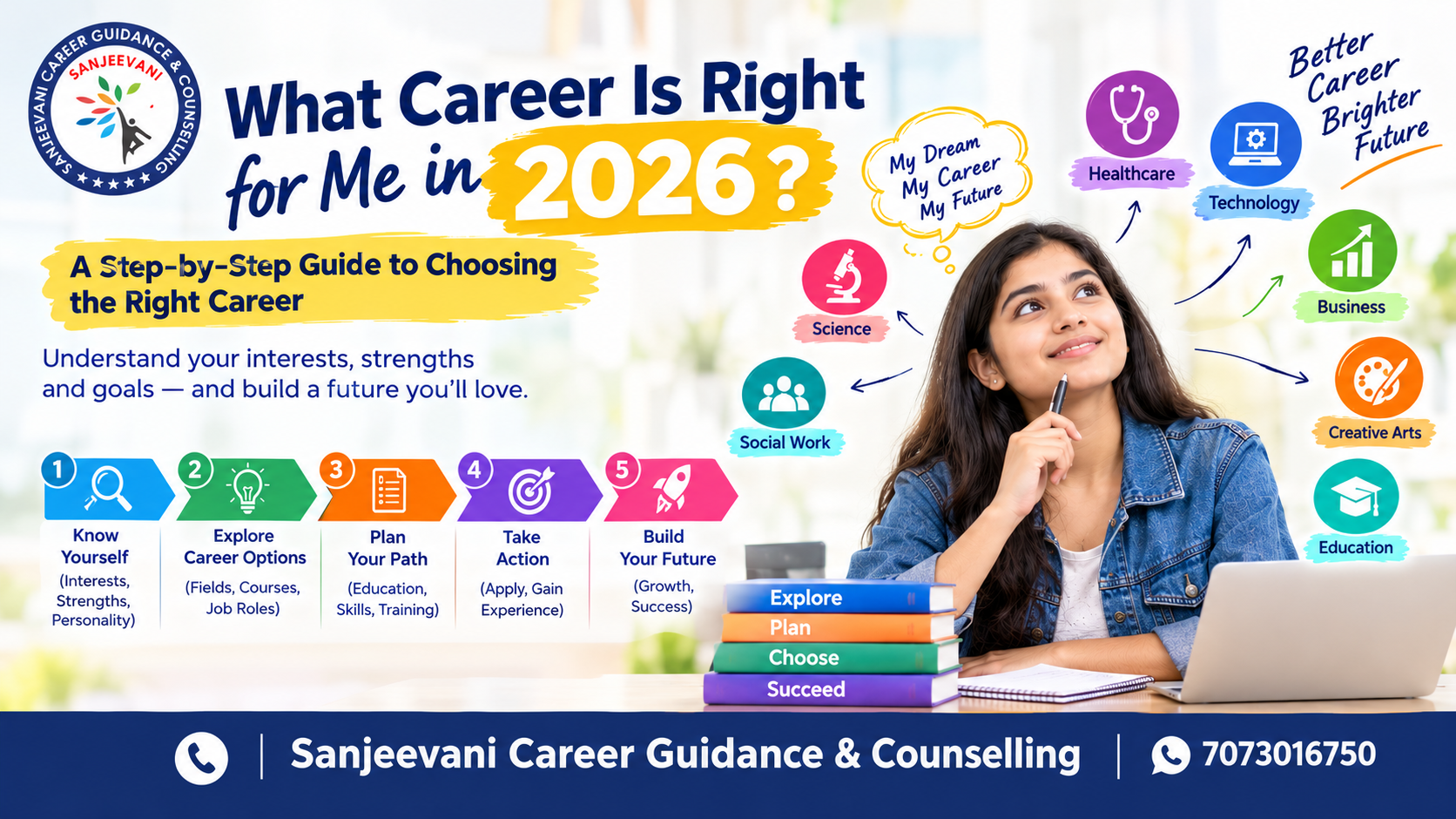
Choosing a career is one of the most important decisions in a student’s life. With hundreds of courses, professions and emerging career options available today, it is completely normal to ask, “What career is right for me?”
The right career is not necessarily the one that is popular among your friends or the one that promises the highest salary. A suitable career should consider your interests, personality, abilities, aptitude, strengths and long-term goals.
This is where professional career guidance and career counselling can help students and parents make a more informed decision.
Why Is Choosing the Right Career So Important?
A career influences your education, skills, lifestyle and future opportunities. Choosing a course without understanding whether it matches your interests and abilities can sometimes lead to confusion, lack of motivation or frequent changes later. Effective Sanjeevani career guidance for students helps them understand different career paths and evaluate their options before making an important academic decision. Instead of simply following trends, students can explore careers according to their individual strengths and interests.
How Do I Identify My Interests Before Choosing a Career?
Your interests can provide valuable clues about the type of work you may enjoy. Think about the subjects you naturally like, activities that keep you engaged and topics you enjoy learning about even without pressure.For example, a student who enjoys understanding people may explore psychology, counselling, human resources or related fields. Someone interested in numbers and business may consider finance, accounting, economics or management. However, interest alone should not determine your career. It should be considered along with aptitude, personality and other career-related factors. A professional Sanjeevani career counsellor can help you explore these factors systematically.
What Are My Strengths, Skills and Natural Abilities?
Every student has a different combination of strengths. Some may be strong in logical reasoning, while others may have excellent communication, creativity, analytical thinking, leadership or interpersonal skills.Understanding your abilities can help narrow down suitable career options. A proper career assessment by Psychometric test and DMIT Test can provide structured information about your strengths and areas that may require further development. This can be particularly useful when a student is confused between multiple courses or career paths.
Should I Choose a Career Based on My Interests or Job Opportunities?
This is one of the most common questions students and parents ask during career planning.The answer does not have to be either interest or job opportunities. A practical career decision should consider both.Your interests can help identify areas you may enjoy, while your aptitude and skills can indicate where you may perform effectively. At the same time, students should research education requirements, career growth, industry changes and employment opportunities. Good career counselling in 2026 brings these different factors together instead of focusing on only one aspect of career selection.
How Does Personality Affect Career Choice?
Personality can influence how you communicate, solve problems, work with people and respond to different environments. For instance, some individuals may enjoy teamwork and communication, while others may prefer independent analytical work. Neither approach is automatically better; different careers require different combinations of qualities. Understanding personality as part of a broader career guidance process can help students explore careers that are more compatible with their natural preferences and working style.
How Can a Psychometric Test Help Me Find the Right Career?
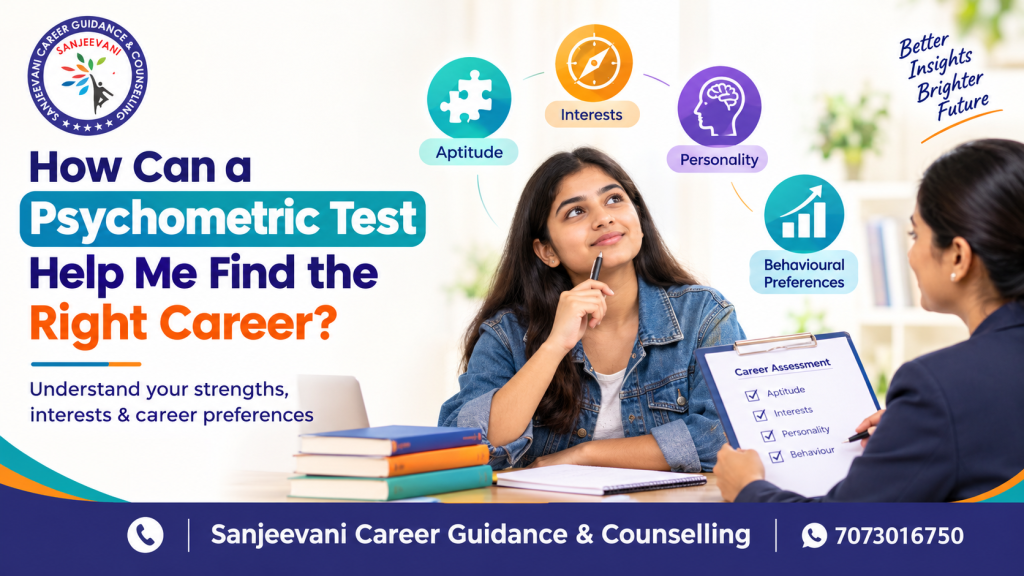
An advanced psychometric test for career guidance can help assess areas such as aptitude, interests, personality traits and behavioural preferences. Instead of relying only on assumptions such as “I am good at one subject, so I should choose this career,” psychometric assessment provides a more structured way to understand different aspects of an individual. A psychometric test should not be treated as a machine that decides your career. Rather, it can serve as a useful assessment tool during career planning and professional counselling.
What Can an Advanced Psychometric Test Reveal About My Career?
An advanced psychometric assessment can help identify patterns in your interests, abilities and personality. These insights can then be discussed with a career counsellor to explore relevant career options. For students who are unsure about choosing between different streams, courses or professions, this type of career assessment test can provide additional clarity. At Sanjeevani Career Guidance, advanced psychometric assessment is used as part of a broader career-guidance process, where the assessment findings can be interpreted in relation to the student’s individual situation and future goals.
How Can DMIT Help in Understanding My Natural Abilities?
DMIT, or Dermatoglyphics Multiple Intelligence Test, is another assessment that some parents and students explore for understanding individual traits and potential areas of development. A DMIT assessment may provide information that can be discussed alongside other educational and career considerations. It should not be viewed as the only basis for selecting a career. Combining assessment insights with academic performance, interests, goals and professional guidance can provide a broader perspective for career planning.
Advanced DMIT Test by Sanjeevani Career Guidance: Understanding Your Potential
Sanjeevani Career Guidance provides Advanced DMIT Test services for students and families looking for additional insights while planning education and careers. The purpose of the assessment is to provide detailed information that can be discussed during career guidance rather than simply giving a one-line career recommendation. For parents, such assessments can also become a starting point for understanding their child’s interests, abilities and areas that may deserve further exploration.
Why Is Professional Career Guidance Helpful When You Feel Confused?
Career confusion is common, especially after Class 10, Class 12, graduation or during a course change. Students may be confused between options such as engineering, medicine, commerce, management, psychology, law, government jobs, technology and emerging career fields. A professional Sanjeevani career coach can help organize these choices by looking at the student’s interests, aptitude, personality, academic background and goals. The objective of career counselling is not simply to tell a student what to do. It is to help them understand their options and make a more informed decision.
How Does Sanjeevani Career Guidance Help Students Choose the Right Career?
Sanjeevani Career Guidance focuses on understanding the individual before discussing suitable career options.The process can include advanced psychometric testing, DMIT assessment and professional career guidance, depending on the student’s requirements. Students can use the information from these assessments to explore suitable streams, courses, skills and career possibilities. Parents can also gain a better understanding of the factors that may influence their child’s career decisions.This approach can be useful for students who are experiencing career confusion or want structured guidance before making an important academic choice.
Why Are Manually Created Career Reports Different From Software-Generated Reports?
One aspect highlighted by Sanjeevani Career Guidance is its focus on manually created, detailed career reports rather than relying only on an automatically generated software report. A detailed report can bring together assessment findings and relevant observations in a more personalized format. The information can then be discussed with a professional career guidance team to understand what it may mean for the student’s education and career planning. The value of any assessment ultimately depends on how responsibly the information is interpreted and used for decision-making.
How Can Parents Support Their Child in Making the Right Career Decision?
Parents play an important role in career planning, but students also need space to understand their own interests and abilities. Instead of comparing children with relatives, friends or classmates, parents can encourage open conversations about subjects, interests, strengths and future expectations. Professional career counselling for students can also provide a neutral environment where students can discuss their confusion and explore different possibilities.
What Should I Consider Before Choosing a Course or College?
Before selecting a course or college, consider:
- Your interests and strengths
- Academic performance and aptitude
- Personality and preferred work environment
- Course curriculum and eligibility
- Career opportunities associated with the course
- Skills you will need to develop
- Higher education possibilities
- Long-term professional goals
- Location, fees and other practical considerations
Taking these factors into account can make career planning more structured and realistic.
How Can I Avoid Common Career Selection Mistakes?
One common mistake is choosing a career only because it is popular. Another is selecting a course purely because friends or relatives are choosing it.
Students may also make decisions based only on salary, without considering whether the field matches their interests and abilities.
Good career guidance encourages students to gather information, understand themselves and research their options before making a final decision.
Can Career Guidance Help If I Have Already Chosen the Wrong Career?
Yes, career counselling can also be useful for students and working professionals who feel disconnected from their current academic or professional path. A career counsellor can help review your interests, skills, educational background and goals and explore possible alternatives. Changing direction does not necessarily mean starting from zero. Existing qualifications and transferable skills may sometimes be useful when moving toward another field.
How to Create a Step-by-Step Career Plan for Your Future?
Start by understanding yourself. Identify your interests, strengths, aptitude and personality. Next, shortlist career fields that match these factors. Research the courses, qualifications and skills required for those careers. After that, compare realistic options and create an education and skill-development plan. Review your progress periodically because career planning is an ongoing process. If you remain confused, professional career guidance and career assessment can provide additional structure and clarity.
Why Choose Sanjeevani Career Guidance for Career Planning?
Choosing a career is a personal decision, and having the right information can make the process easier to understand. Sanjeevani Career Guidance offers professional career counselling, advanced psychometric tests and advanced DMIT assessments to help students and parents explore career possibilities based on individual characteristics and goals. The focus is on understanding the individual rather than following a one-size-fits-all approach. Detailed assessment reports can be used as a foundation for further discussion and career planning. If you are asking, “What career is right for me?”, starting with self-understanding and professional career guidance can help you move from confusion toward a more structured career plan.
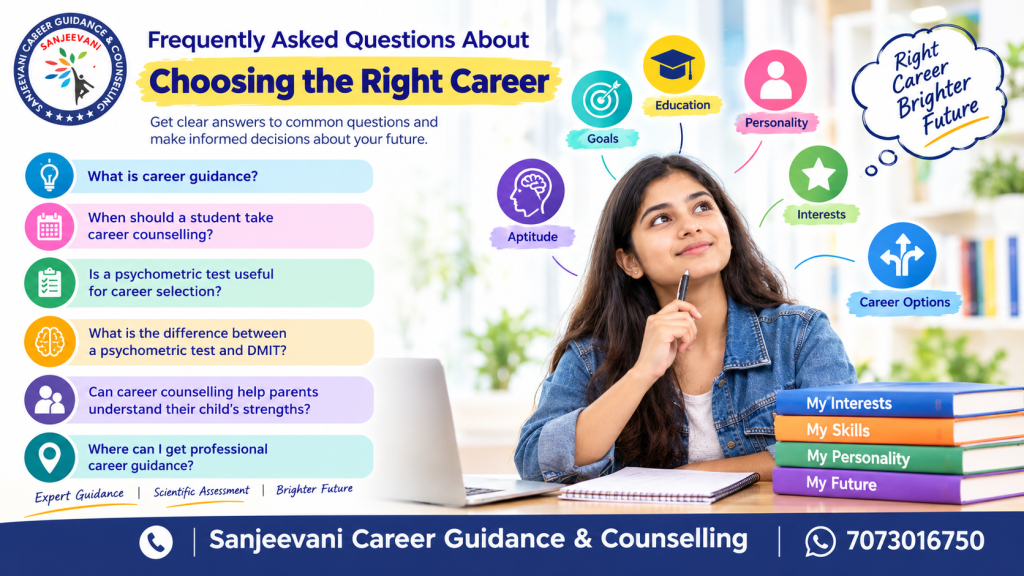
Frequently Asked Questions About Choosing the Right Career
What is career guidance?
Career guidance is a structured process that helps students or professionals understand their interests, abilities, personality, educational options and possible career paths.
When should a student take career counselling?
Students can consider career counselling when choosing a stream after Class 10, selecting courses after Class 12, planning higher education or when they are confused about their career direction.
Is a psychometric test useful for career selection?
A psychometric test can provide structured information about interests, aptitude and personality. It should be used as one part of the overall career-planning process rather than as the sole decision-maker.
What is the difference between a psychometric test and DMIT?
A psychometric assessment generally evaluates areas such as aptitude, interests and personality through standardized psychological assessment methods. DMIT is a separate assessment approach based on dermatoglyphics and multiple-intelligence concepts. They should not be treated as interchangeable tests.
Can career counselling help parents understand their child’s strengths?
Yes. Professional career counselling can help parents understand their child’s interests, abilities and career-related preferences and encourage more informed discussions about future education.
Where can I get professional career guidance?
Students and parents can consult a qualified career counsellor or career guidance centre that provides appropriate assessment, counselling and information about education and career options. Sanjeevani Career Guidance offers career guidance along with advanced psychometric and DMIT assessment services.